
Addressable LED Pixel Point Lights for Facades
Individually addressable LED pixel nodes for dot matrices and facade patterns: 27 GD-P / GD-PM models. Catalogue pitch 160 mm, DMX512 control.
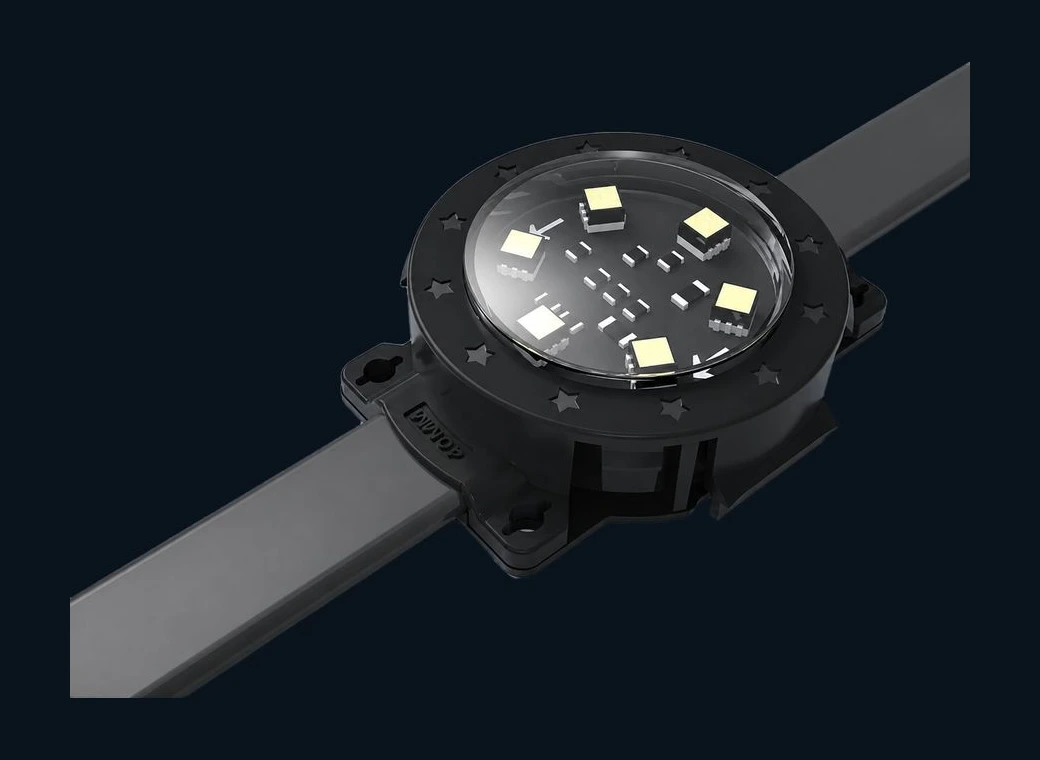
Pixel point lights are individually addressable LED nodes spaced along a cable to form dots, matrices or animated facade patterns. GDXC Lighting lists 27 point-light models in the GD-P and GD-PM series; the catalogue describes 160 mm spacing and 30 pixels per string, and pixels are controlled over DMX512. String length and node count are confirmed per project.
Scope: what this product page covers
This page covers point-source LED nodes for dot patterns, pixel maps and outline effects. It does not cover linear bars or wall washers. The 160 mm pitch and 30 pixels per string found in the catalogue are descriptive figures; the electrical and signal design of a real installation is reviewed per project.
Specifications
| Catalogued point-light models | 27 entries (GD-P and GD-PM series) |
|---|---|
| Catalogue pitch description | 160 mm spacing |
| Catalogue string description | 30 pixels per string — descriptive, not a field limit |
| Control protocol | DMX512 |
| Colour versions | RGB pixel modules listed; confirm version per model |
| Historical series names | PS-30 / 50 / 100 / 200 / 300 / 500 (names only) |
Materials
- PC housing and lens
- RGB LED module as listed per model
- Aluminium mounting parts where specified
- Sealed connection leads and connectors
Manufacturing process
- Pattern and pitch layout The dot pattern is drawn on the elevation first. The 160 mm catalogue pitch is used as a starting reference only; actual spacing comes from the drawing and the viewing distance.
- Node and string configuration The GD-P or GD-PM model, colour version and node count per string are fixed together. The 30 pixels-per-string line in the catalogue is not adopted as a maximum without a project review.
- Cable routing and addressing Cable runs, connector positions and DMX512 address order are planned from the same pattern drawing so that pixel one on the drawing matches pixel one on site.
- Signal and connector check Each string is checked for node-by-node response and connector seating before it is packed. Failures at this stage are far cheaper than after the nodes are mounted on a facade.
- Dispatch record The packing list records node count, string length, colour version and address start per string, so an installer can reproduce the pattern without guessing.
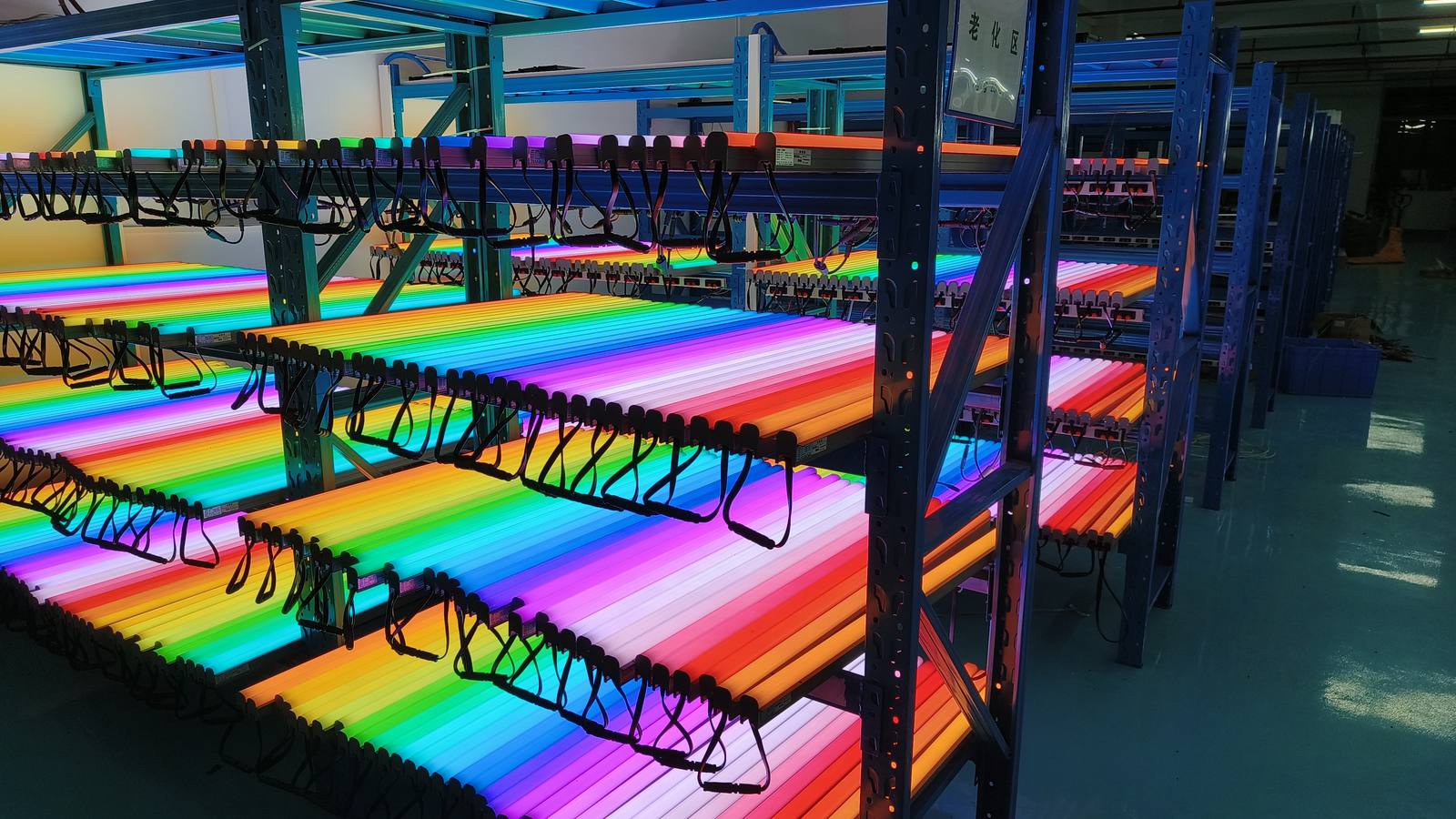
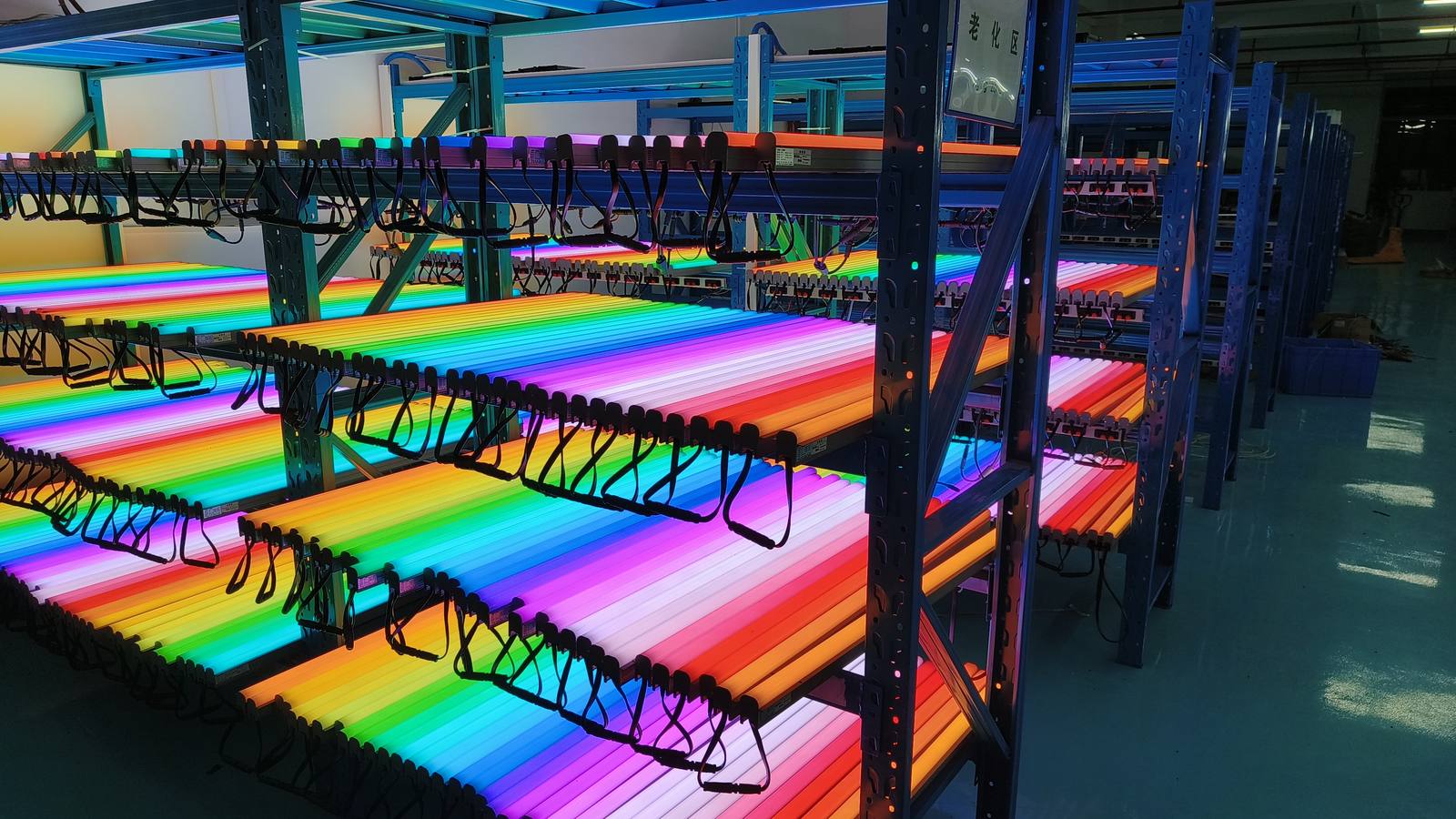
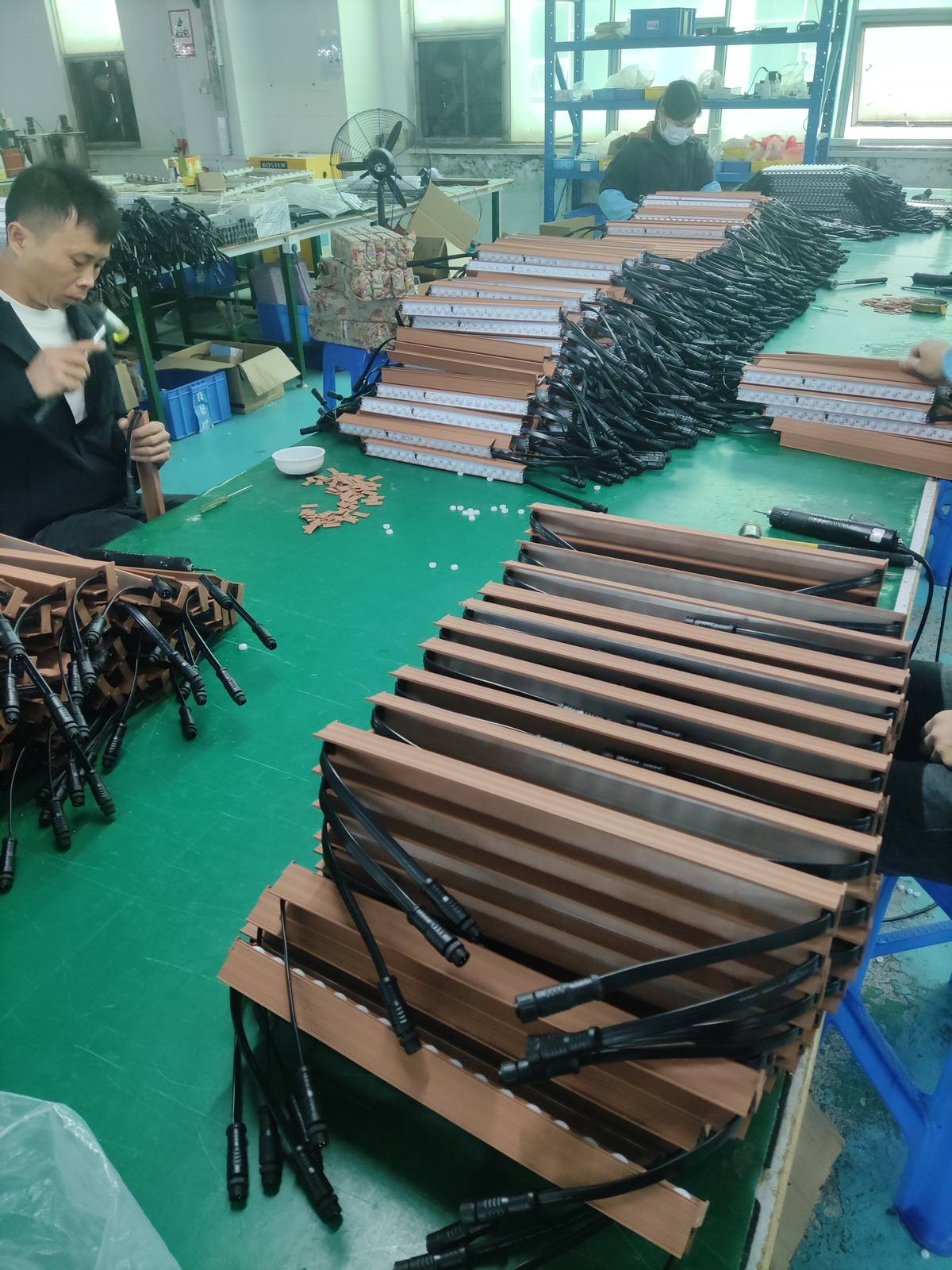
Pixel Point Lights in production
Typical applications
- Dot-matrix and media facade patterns
- Roofline and canopy edge outlines
- Grid arrays under soffits and balconies
- Bridge and railing node patterns
- Landscape and plaza feature points
Quality and documentation
- 3-year warranty on every outdoor fixture
- Node-by-node address check before packing
- Signal continuity checked on each assembled string
- Connector seating and lead condition checked per string
- Colour version verified against the schedule
- Documentation available per model on request
What we do not do
The 160 mm pitch and 30 pixels per string are catalogue descriptions, not verified field limits; we do not quote them as maximum string lengths. DMX512 is the control protocol used, and multi-channel control is supported for large projects; no certification document is claimed. Pixel nodes are not a substitute for wall washers or flood lights.
Technical questions
How many pixel lights can run on one DMX512 string?
The catalogue describes 30 pixels per string, but that is a description rather than a verified site maximum. Signal length, cable runs and power injection depend on the installation, so the string count is confirmed per project instead of copied from a catalogue line.
What does 160 mm pixel pitch mean for a facade pattern?
Pitch is the centre-to-centre distance between adjacent nodes. The catalogue lists 160 mm for the point-light series; a tighter visual pattern needs closer spacing, which changes node count and address plan. The final pitch comes from the elevation and viewing distance.
Does DMX512 mean a pixel light is certified?
No. DMX512 is a control protocol, not a product certification. GDXC writes DMX512 as the protocol used by the GD-P and GD-PM pixel models and supports multi-channel control for large projects. No certificate number is published on this site.
Can pixel point lights replace wall washers?
No. Pixel nodes create dots and patterns; wall washers produce a continuous wash across a wall. The catalogue lists 27 point models and 20 wall-washer models, and the two are selected for different effects rather than swapped.
Adjacent products and capabilities
Wall Washer Lights
Wall washer lights are linear LED fixtures mounted parallel to a facade to throw an even wash of light across vertical surfaces from a short setback. GDXC Lighting catalogues 20 wall-washer models, including GD-WW3524 at 18W/24W with 30°, 60°, 10×30° and 10×60° beam options, DC24V input and IP65 construction..
View productLinear Lights
Linear LED lights are rigid, module-based fixtures that form continuous lines of light along cornices, railings and facade edges. GDXC Lighting lists 10 linear models; GD-L2048PC measures W20 × H48 × L1000 mm, uses 5055-48LED, runs at 10W/12W/15W on DC24V and supports single-colour, RGB and RGBW versions with DMX512 control..
View productFlood Lights
Flood lights are directional LED fixtures that project a concentrated beam onto a surface or an area from a distance. GDXC Lighting catalogues 29 flood models; the compact square body measures 65 × 65 × 55 mm and uses 3×2W or 4×2W LED arrays on AC220V, while project-series names such as FL-BM and FL-FG are listed without fixed wattages in current material..
View productQuality & Inspection
Beam options, IP construction and per-model documents confirmed against the exact configuration.
Inspection capabilitySend your elevation, get a project quote
Send the facade drawing or fixture schedule with quantity and destination. Quotes are built per configuration and trade terms; no internal price list is published.